
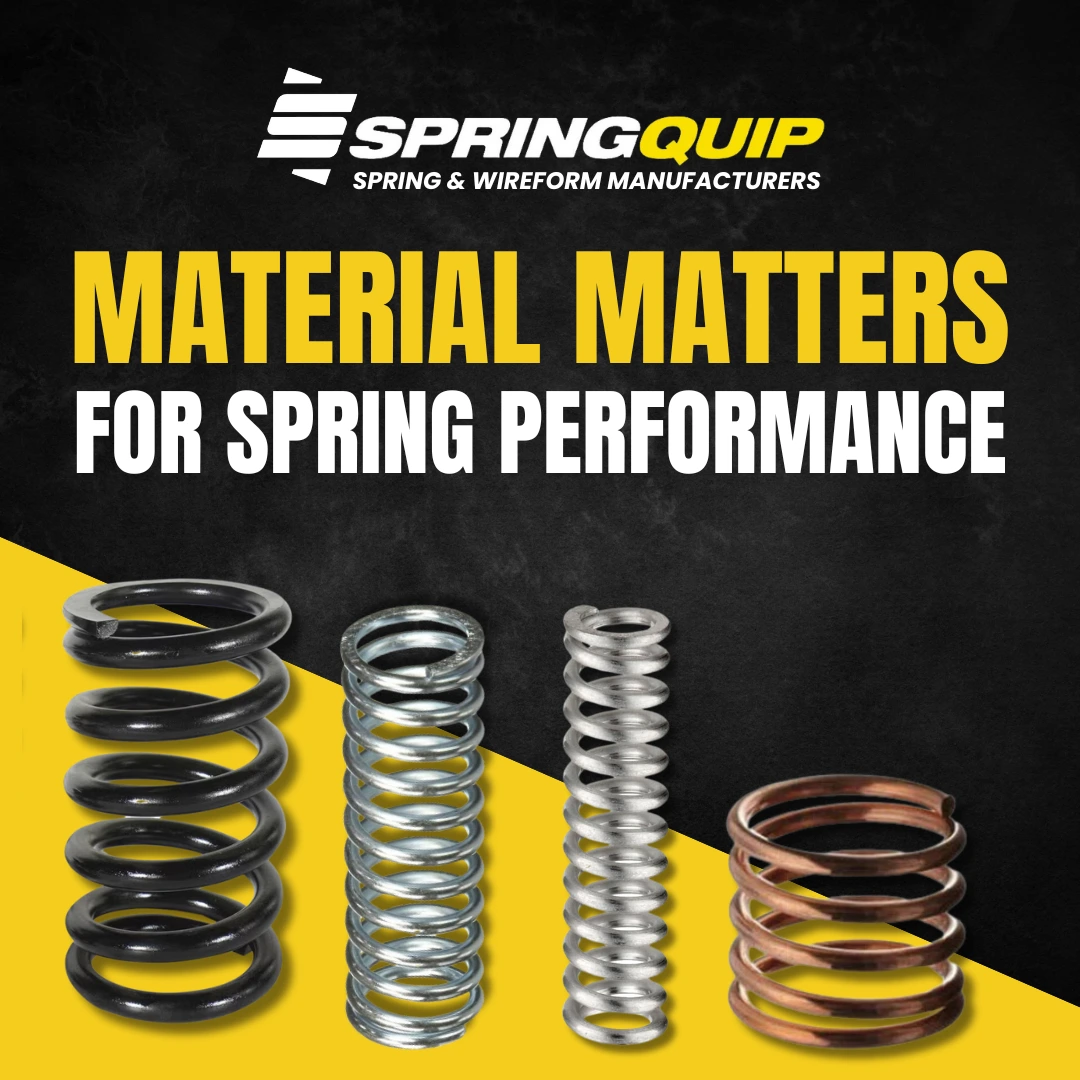
When it comes to manufacturing springs, selecting the right material is crucial for ensuring durability, performance, and cost-effectiveness. The choice of spring material directly impacts the spring’s longevity and resistance to environmental factors such as rust and corrosion. At Springquip, we offer a wide range of high-quality spring materials tailored for various applications. Here’s a guide to help you choose the best spring material for your needs.
1. Carbon Black Spring Steel
Overview: Carbon black spring steel is one of the most economical options for spring manufacturing.
Key Features:
- Cost-effective: It is the cheapest type of spring wire available, making it a popular choice for budget-conscious projects.
- Rust susceptibility: While affordable, this material is prone to rusting unless treated.
Applications: Carbon black spring steel is ideal for indoor or controlled environments where exposure to moisture is minimal. For added protection, springs can be galvanized after formation.
2. Pre-Drawn Galvanized Spring Steel
Overview: Pre-drawn galvanized wire offers enhanced durability and rust resistance compared to carbon black spring steel.
Key Features:
- Rust resistance: The galvanization process creates a protective layer, significantly slowing down the rusting process.
- Improved lifespan: Springs made from this material are well-suited for applications where they may be exposed to moisture.
Applications: Ideal for outdoor environments or applications requiring a longer lifespan compared to untreated spring steel.
3. 302 Stainless Steel Spring Steel
Overview: Stainless steel is highly resistant to rust and corrosion, making it a premium choice for demanding environments.
Key Features:
- Corrosion resistance: This material does not rust under normal conditions, providing superior durability.
- Nickel coating: Nickel-coated stainless steel is commonly used in electronic applications for its enhanced performance and longevity.
Applications: Suitable for extreme environments and industries such as electronics, marine, and chemical processing.
4. Phosphor Bronze Spring Steel
Overview: Phosphor bronze wire is a specialist material designed for specific applications, particularly in the electronics industry.
Key Features:
- Specialized properties: High resistance to corrosion and excellent conductivity make it ideal for electronic components.
- Durability: The material offers long-term performance and reliability.
Applications: Commonly used in precision instruments, electronic connectors, and other high-performance applications.
Factors to Consider When Choosing Spring Material
- Application Environment: Determine whether the spring will be exposed to moisture, chemicals, or extreme temperatures.
- Budget: Evaluate the cost implications of different materials, balancing affordability with durability.
- Performance Requirements: Consider factors such as load-bearing capacity, elasticity, and resistance to wear and tear.
- Special Requirements: For electronic or specialized applications, materials like nickel-coated stainless steel or phosphor bronze may be essential.
Conclusion
Selecting the right spring material is a critical decision that affects the performance and longevity of your product. At Springquip, we provide expert guidance and a diverse range of materials to meet your unique needs. Whether you require cost-effective carbon black spring steel or specialized phosphor bronze wire, our team ensures the highest quality and durability for every project.
Contact us today to learn more about our spring materials and how we can help you create long-lasting, reliable springs for any application.